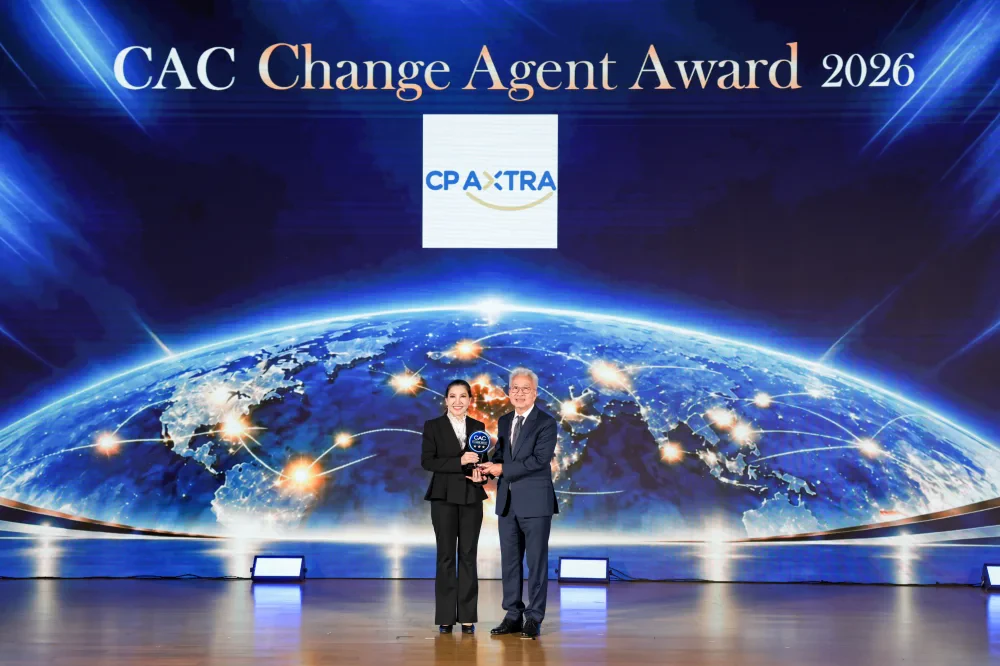
CP AXTRA Strengthens Its Role as a Wholesale and Retail Leader, Connecting Thai Products to Global Markets Advancing Supply Chain Capabilities to Navigate Global Trade Shifts
Bangkok, November 18, 2026 – CP AXTRA Public Company Limited, operator of Makro and Lotus’s, is accelerating efforts to strengthen Thailand’s supply chain in response to changing global trade dynamics. Leveraging its regional business network, the company aims to connect Thai producers, SMEs and farmers with international markets while promoting ESG standards and traceability systems to enhance competitiveness and drive sustainable growth.
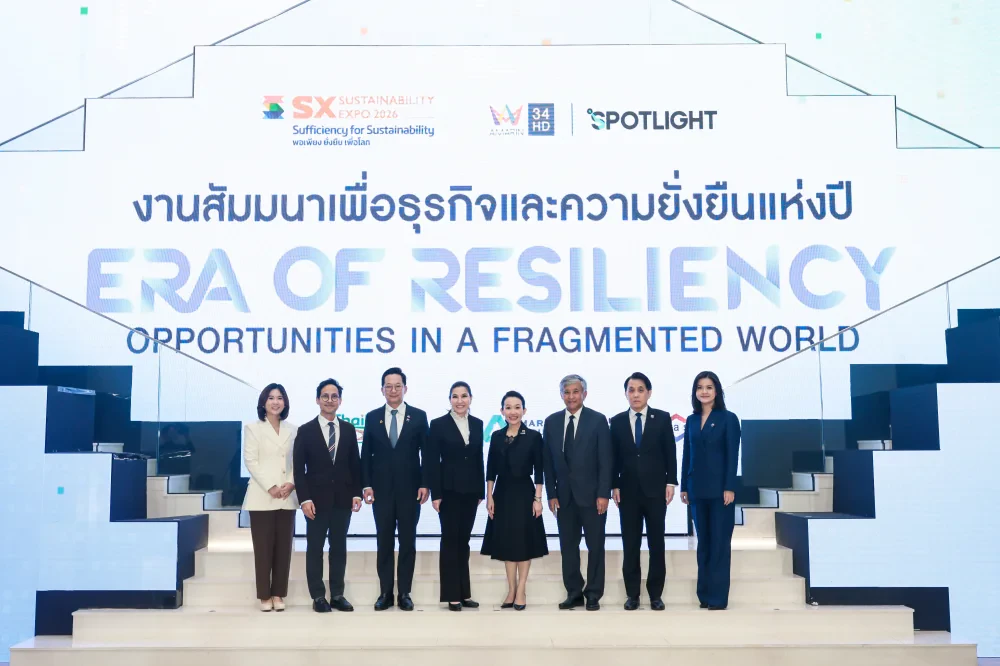
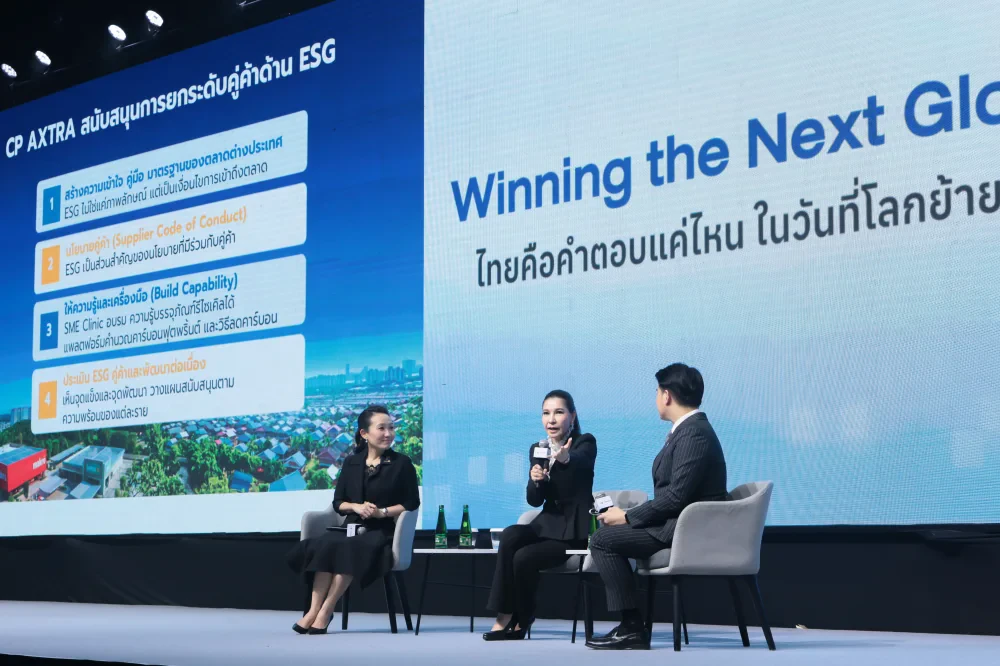
Ms. Siriporn Dechsingha, Chief Sustainability and Corporate Communications Officer of CP AXTRA, shared the company’s business perspectives and strategic approach at a panel discussion during Sustainability Expo (SX) 2026, under the theme “ERA OF RESILIENCY: OPPORTUNITIES IN A FRAGMENTED WORLD.” The discussion explored shifts in global supply chains, as well as the opportunities and challenges facing SMEs and Thai products in expanding into international markets.
Ms. Siriporn said, “Global trade is undergoing significant changes and facing uncertainties on multiple fronts, driven by geopolitical developments, economic conditions and evolving international trade regulations. As a result, businesses can no longer focus solely on costs, product quality and production efficiency. They must also prioritize Supply Chain Resilience—the ability to adapt to disruptions through diversified sourcing, effective logistics management and the use of data to assess and respond to potential risks.
“At the same time, environmental standards are becoming increasingly important requirements in international trade. Examples include the European Union’s Carbon Border Adjustment Mechanism (CBAM) and Extended Producer Responsibility (EPR) regulations for packaging introduced in various countries. These developments demonstrate that sustainability is no longer simply a matter of corporate image or social responsibility; it has become a direct factor influencing market access and business competitiveness.
“Thailand has the potential to move beyond being a manufacturing base and become a regional hub connecting products, producers and markets. The country benefits from diverse raw materials, particularly agricultural and food products, strong production capabilities, as well as its strategic location and extensive trade networks within ASEAN. However, a key challenge is ensuring that Thai businesses are equipped to understand and comply with the requirements of international trading partners. These include environmental standards, raw material traceability, packaging management and greenhouse gas emissions reduction. This is particularly challenging for SMEs and farmers, who may face limitations in technology, capital and the knowledge needed to adapt.
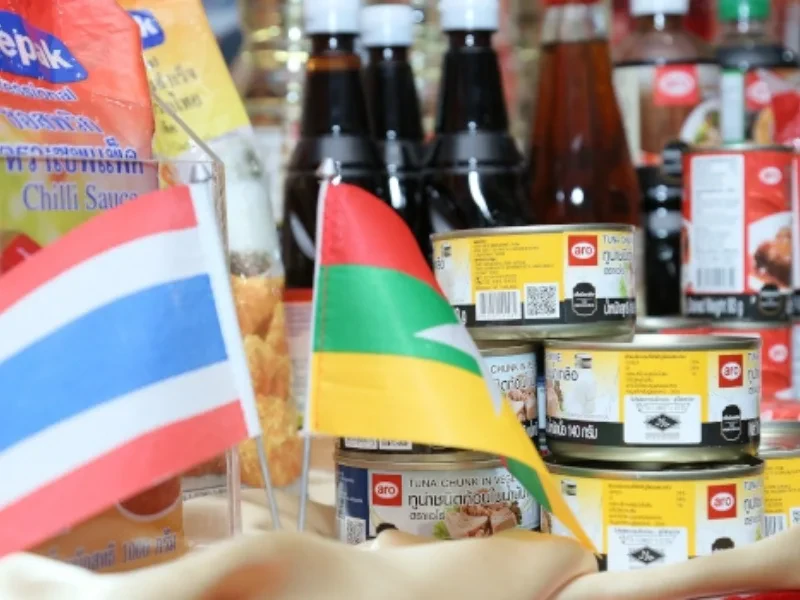
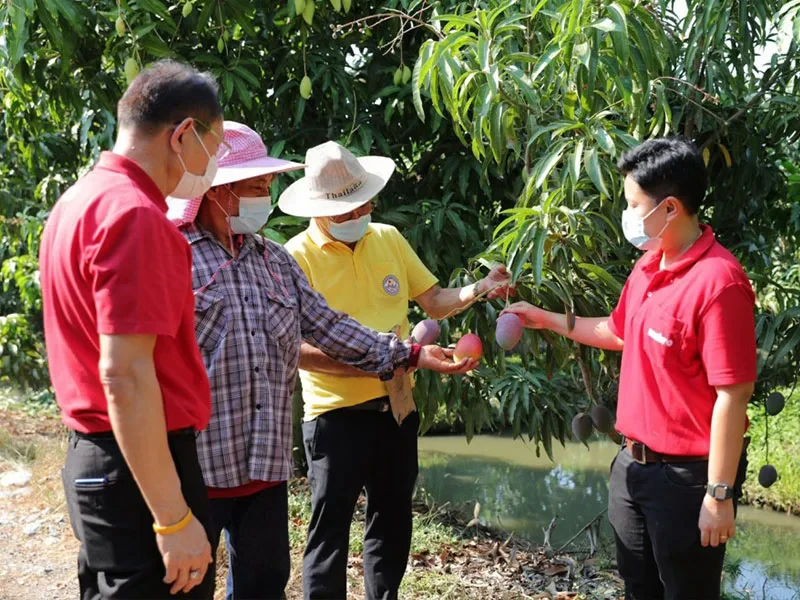
“As a wholesale and retail operator, CP AXTRA serves as a key link between market demand and Thai producers and entrepreneurs. Through its network of more than 2,000 Makro and Lotus’s stores and business operations in 10 countries, the company has established channels and regional business networks that can help connect Thai products with regional markets, while creating greater opportunities for local producers, SMEs and farmers to reach consumers in international markets.
“CP AXTRA also places strong emphasis on raising standards among thousands of business partners through its Supplier Code of Conduct, which covers ESG principles. The company provides knowledge and guidance on emerging regulations and standards, while offering tools and platforms to help suppliers assess their organizational carbon footprints. In addition, ESG assessments cover 100% of the company’s Significant Suppliers. The assessment results are used to develop tailored support and improvement plans based on each supplier’s level of readiness.
“Meanwhile, the company has adopted i-Trace technology to strengthen traceability, enhance product data transparency and build trust throughout the supply chain. These initiatives not only help suppliers meet higher standards and compete in markets with increasingly stringent requirements but also support CP AXTRA’s efforts to manage and reduce indirect greenhouse gas emissions across its supply chain, particularly Scope 3 emissions.”
Ms. Siriporn further emphasized, “Positioning Thailand as a Regional Hub cannot be achieved by the private sector alone. It requires collaboration across all sectors. The government plays an important role in supporting infrastructure and establishing trade-friendly regulations. Private companies and large organizations can leverage their networks, technologies and expertise to help strengthen the capabilities of local businesses. At the same time, SMEs and farmers must continuously improve product quality and production standards to meet the requirements of global markets.
“Thailand’s opportunity lies not simply in producing more goods, but in building an effective trade ecosystem that connects Thai producers, farmers and SMEs with regional and global markets. CP AXTRA is ready to leverage its business network and expertise to help create these opportunities while raising standards throughout the supply chain. Our goal is to ensure that the growth of Thai businesses in global markets generates greater value and distributes opportunities more broadly and sustainably among Thai entrepreneurs,” Ms. Siriporn concluded.